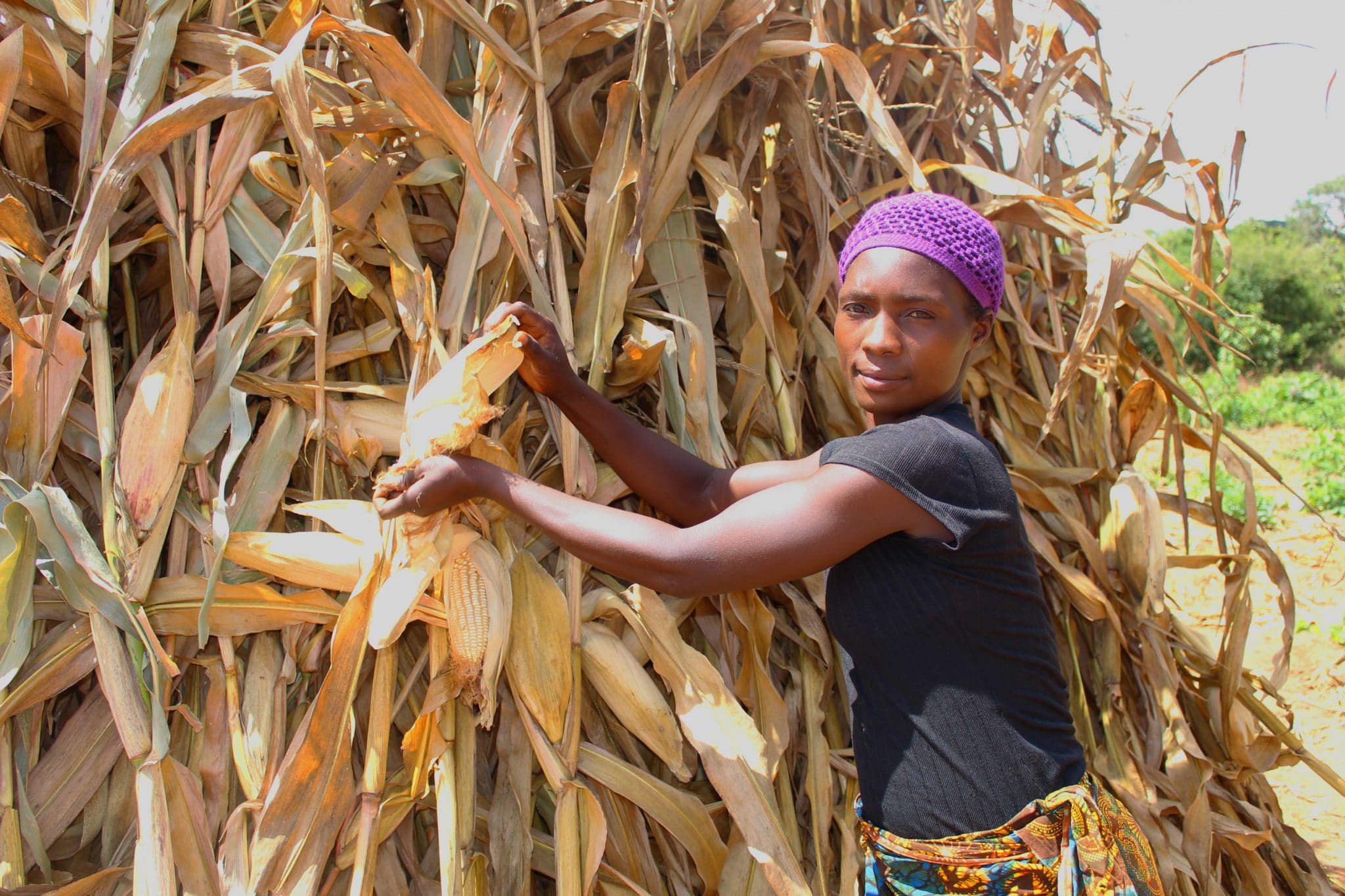
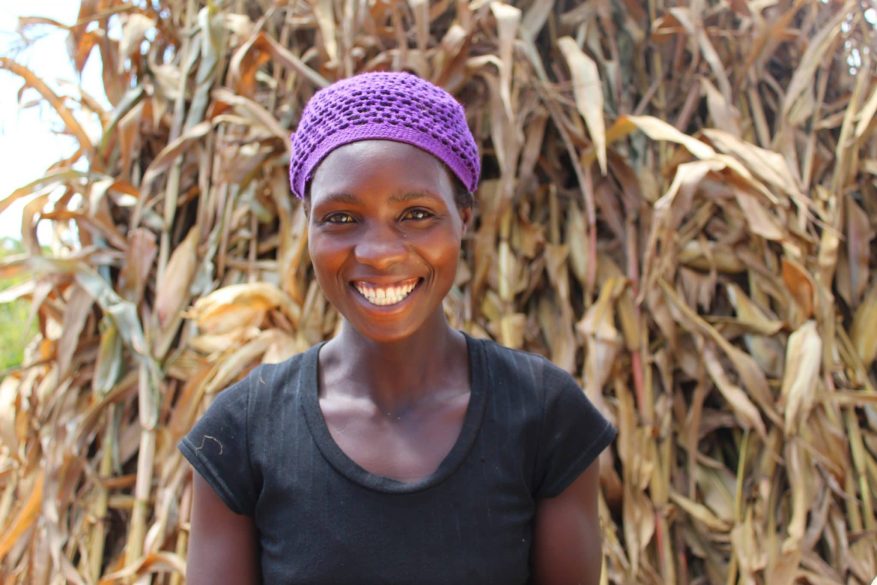
24-year-old Merinda attends a school that doesn’t have a teacher. Neither does it have walls, books, or a blackboard!
But Merinda Kafunda wakes at 5am every Friday morning, and looks forward to the long walk she must make to her ‘school’ in Chitipa District in northern Malawi.
Merinda attends a ‘field school’, a rural farm-training centre that is one of over 13,000 such facilities to have been established across Malawi by ‘BETTER’, an EU-backed project that is promoting training and education to farmers in a range of new practices that will help them to grow enough food in the face of a changing climate.
Merinda’s ‘Mbanangwa Farmer Field School’ has its own demonstration plot where techniques and plant varieties are tested. Their teacher is a member of the community who has brought to the Mbanangwa school the learning that they have received, attending ‘training of trainer’ programmes organised by Self Help Africa across the country.
In a region that has endured erratic rainfall patterns for many years, Merinda says that even in the short number of years that she has been farming, she has witnessed drought, floods and rains that are almost impossible to predict.
She is optimistic too, that the ‘pit planting’ techniques that she learned at her field school will give her better yields in the future.
Explaining the approach, Merinda describes how they dig holes exactly where they will plant, and then fertilise each ‘pit’ with compost manure and animal dung. Once their plants are in the ground they water each hole individually, and cover each with stalks and stems to prevent the moisture from evaporating.
This year, the mother of two young children expects to harvest over 130 kilograms of maize from her small farm, using this pit planting technique. “Previously, I used to harvest 40 kilograms of maize. It only lasted us for four months, when I would need to work for others to get food for my family, or else look for hand-outs.”
Across Malawi, 402,000 households are set to benefit from the five-year ‘BETTER’ project, whose overall objective is to use farmer field schools to increase household resilience to shocks, and to improve the food, nutrition and income security of smallholder farming families.