
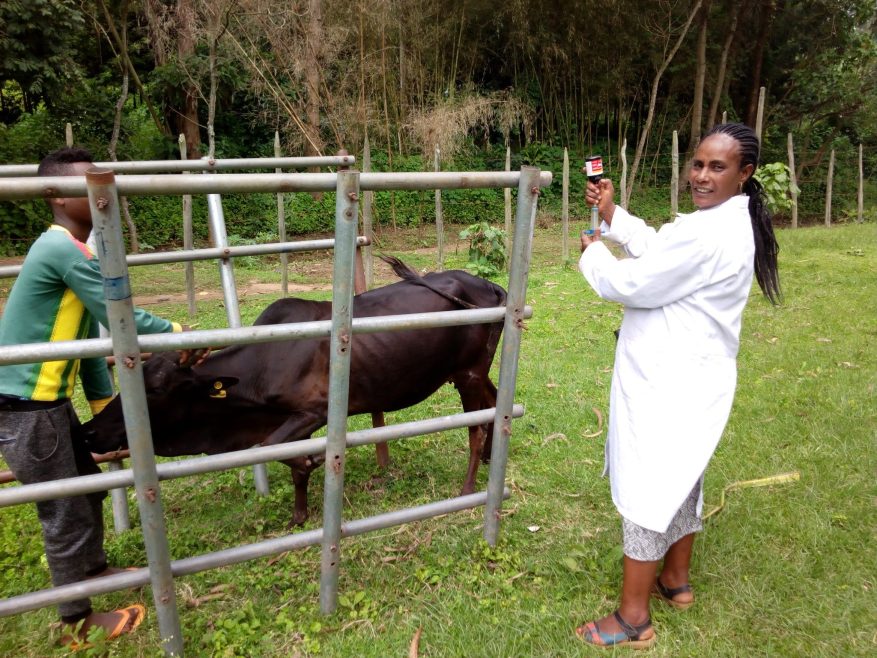
Yederawork Defar is an animal health assistant in southern Ethiopia’s SNNR Province. Her job is to keep farm livestock healthy, productive and free from pests. And in rural, remote Ethiopia, keeping farm animals healthy and alive is vital – because of the nation’s overall reliance on agriculture. For more than three decades, Self Help Africa has been working to improve agricultural productivity and performance to reduce poverty and increase food security in Ethiopia.
A 38-year-old widow and motherof-three who comes from the local area, Yederawork is one of more than 300 animal health assistants involved with the Self Help Africa project – and importantly, she’s one of 80 women who fill the role of frontline veterinary health workers. Gender is important here – a strong representation of women is helping to address a long-standing challenge facing Ethiopia’s farming sector – the diminished role that women have traditionally played on farms.
Yederawork says that no farmers she works with have an issue dealing with a woman animal health assistant. Rather, they are grateful for the visit and the attention given to their livestock – it makes no difference to them whether their animals are being seen by a man or a woman.
The work she is doing is vital, as farmers in her region have traditionally had little access to veterinary support at local level, and as a result, tick and pest-borne viruses and viral diseases have had a devastating impact on domestic livestock. Yederawork and her colleagues have received additional training as part of the programme, and can more easily identify diseases and diagnose appropriate treatments in a timely fashion.
The programme approach, incorporating both farmer and animal health professionals, has Yederawork confident that she and her colleagues will continue to improve and maintain the long-term health of Ethiopia’s rural livestock population in the years ahead.
The full article is available in the July 2017 World Farmers’ Organisation Farmletter.