
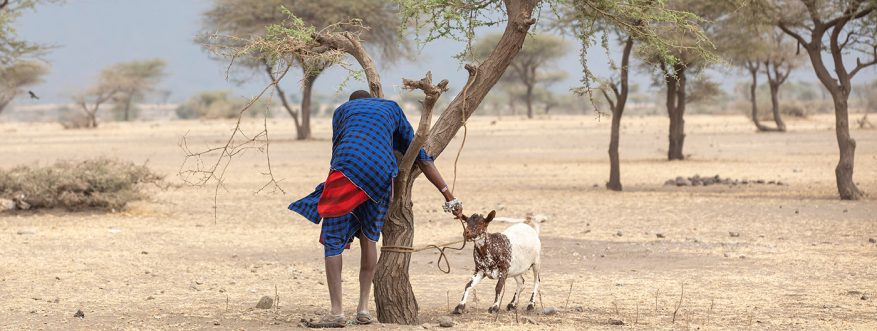
As 2025 drew to a close, the failure of the traditional ‘rainy season’ in Kenya, southern Ethiopia and neighbouring countries provided a worrying sign that a new wave of widespread crop failure and food shortage is looming for Africa.
With forecasts for hotter and drier than average conditions in the early months of this year, countries of sub-Saharan Africa must brace themselves for new climate-related disasters in the months to come.
This should not be news in a world where temperature records are being broken with each passing year. Last November, 1,700 people died and 1.1 million list their homes to flooding in southern Asia, and a few months before that 1,000 died and seven million displaced by flooding in Pakistan.
Climate experts rank Africa as the continent that is most vulnerable to the effects of global warming, with eight of the ten most at risk countries located in Africa. It’s easy to see why, when close to 65 per cent of Africa’s population rely on small-sized farms for their survival, and most of these 33 million farms are reliant almost exclusively on rainfall for their water.
But there are remedies – and investment and support for better farming practices, promotion of climate-resilient crops and farm practices and improvement to Africa’s food systems can transform a sector upon which hundreds of millions of people rely.
Ireland’s upcoming Presidency of the Council of the European Union provides us with a unique opportunity to help shape Europe’s priorities on climate, development and global solidarity in 2026 and beyond. We must encourage Europe – now the single biggest supporter of hunger eradication on the continent – to not turn its back on communities who are facing the worst effects of changing climate.
EU development and research policy does already support climate adaption, rural enterprise, market access and rural job creation. Across the continent of Africa, Irish Aid too has been a strong advocate for rural enterprise development, food and nutrition security, for measures that support climate adaptation, for agricultural research and for the provision of social protection for the poorest.
Indeed, while other donor countries were cutting back their support to the world’s most vulnerable, Ireland stepped up in 2025 – Ireland can play a leadership role, and champion the practical, proven solutions already emerging across the continent – ensuring tens of millions of the world’s most vulnerable small-scale farming families are not left to face the coming year, and the climate challenges it will bring, alone.
This is an abridged version of an editorial that published in The Irish Independent newspaper. You can read the full piece here.