
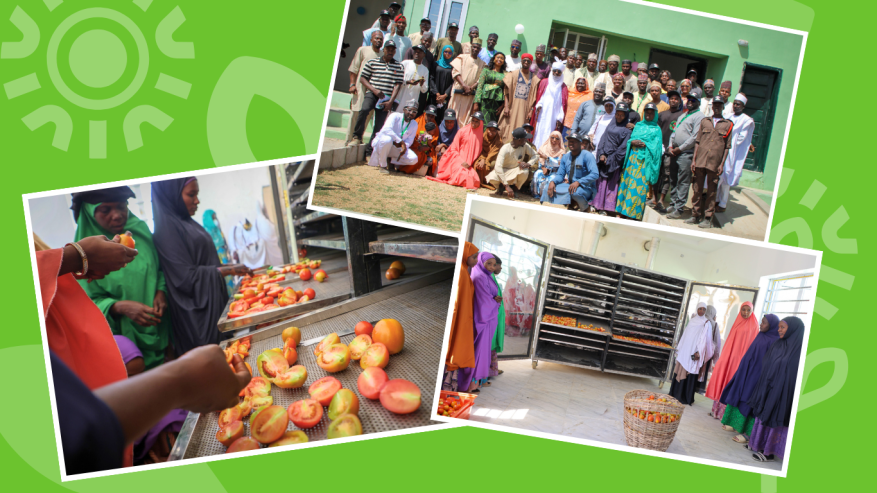
A new solar drying hub in Nigeria is set to transform the lives of farmers and young agripreneurs in the country’s Kano State. The north-west Nigerian State is one of the country’s major agricultural strongholds, with an estimated 2.4 million farming households producing crops including grains to tomatoes, peppers and onions.
But while crops grow in abundance there, without reliable refrigeration and storage farmers lose a substantial amount of their harvest before it can be sold.
Solar drying extends the shelf life of produce from days to months, meaning less food waste, a more stable income and more market options for farmers because there is less pressure to sell quickly at low prices during peak season.
The 100 million Naira (€62,000), 1,000m2 hub, built in partnership with the World Food Programme and Mastercard Foundation, also hosts UV drying facilities as well as processing and packaging equipment that is now available to local farmers at a heavily subsidised cost, seven days a week. The day-to-day running of the hub will be the responsibility of a local company founded by men and women farmers from the area. It is expected to provide local job opportunities and business development training to around 5,000 young people – up to 70 per cent of whom are women working across Kano’s agricultural value chain, including in processing, packaging, distribution and trade.
“At Self Help Africa, we believe development works best when it builds on local strengths,” said Joy Aderele, Country Director of Self Help Africa in Nigeria. “Kura [in Kano State] already has the farmers. It already has the markets. What was needed was to provide access to the right technology to unlock greater value. Our hope is simple that this facility reduces waste, increases income, and becomes a model that can be replicated across Kano State and throughout Africa.”
Read more about our work in Nigeria here.