
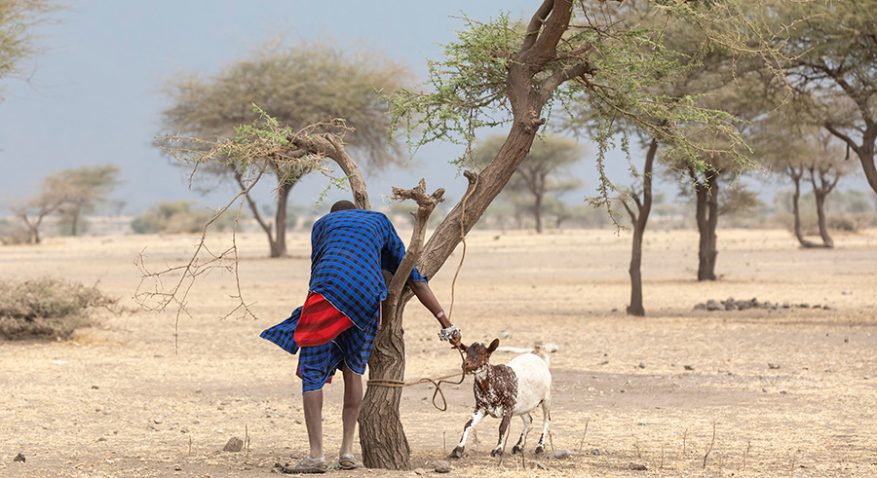
As 2025 drew to a close, the failure of the traditional ‘rainy season’ in Kenya, southern Ethiopia and neighbouring countries provided a worrying sign that a new wave of widespread crop failure and food shortage is looming in Africa.
With forecasts for hotter and drier than average conditions in the early months of this year, countries of sub-Saharan Africa must brace themselves for new climate-related disasters in the months to come.
This should not be news in a world where temperature records are being broken with each passing year. Last November, 1,700 people died and 1.1 million list their homes to flooding in southern Asia, and a few months before that 1,000 died and seven million displaced by flooding in Pakistan.
Climate experts rank Africa as the continent that is most vulnerable to the effects of global warming, with eight of the ten most at risk countries located in Africa. It’s easy to see why, when close to 65 per cent of Africa’s population rely on small-sized farms for their survival, and most of these 33 million farms are reliant almost exclusively on rainfall for their water.
But there are remedies – and investment and support for better farming practices, promotion of climate-resilient crops and farm practices and improvement to Africa’s food systems can transform a sector upon which hundreds of millions of people rely.
Across our programmes in sub-Saharan Africa we are doing this work, helping small-scale farming families to adapt to the changing conditions, diversify their farming activities, and sourcing markets where they can sell the food that they are growing.