
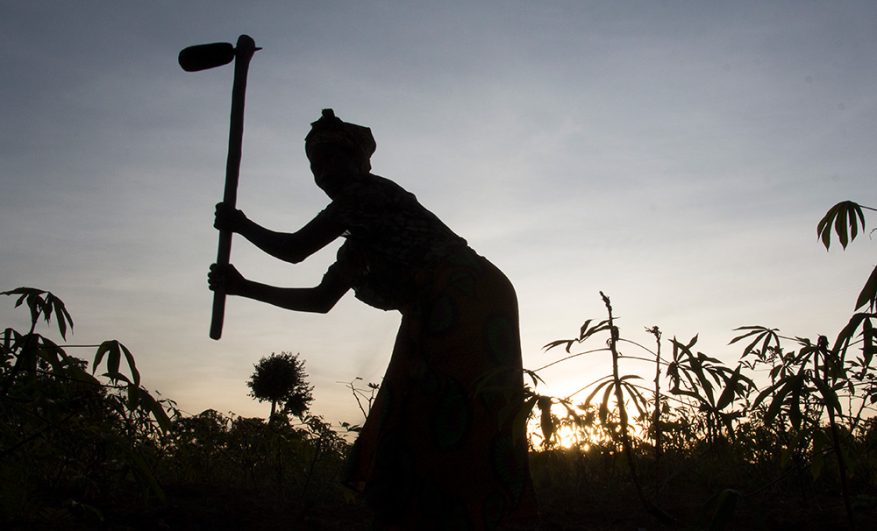
Hundreds of thousands of families in Zambia’s Southern Province – traditionally one of the country’s ‘breadbaskets’ – lost almost everything when the region endured its worst drought in living memory, two years ago.
More than 280,000 families across 84 districts, most of whom produced the national staple cereal, maize (corn) were affected. Although seasonal rains have since improved, economic recovery for many has been slow.
Self Help Africa is working with tens of thousands of people in a region that has the lowest rainfall in Zambia, to help farming households rebuild their lives and ensure they are more resilient to future weather shocks.
In Gwembe and Kalomo Districts, Self Help Africa is currently helping 3,000 farmers – almost two thirds of whom are women – to adapt to changing climate and reduce their risk and vulnerability to its effects.
In recent months:
- 2,780 households ( 62% women) attended training activities to support new ‘climate smart’ farming methods.
- 1,349 farmers (54.5% women) were trained in soil and water conservation methods and pest control.
- 100 farmers began beekeeping to generate income and support biodiversity.
- 1,000 households (62% women) began horticulture with the support of four new solar-powered irrigation systems. Cabbage, onion, orange-fleshed sweet potato, winter maize, tomatoes, cowpeas, cassava, and Chinese cabbage are being grown.
- 4,000 farmers received seed to diversify their production away from maize to more resilient cereals.
- Systems were also established to support livestock watering needs and reduce the risks of waterborne disease.
- 5,780 fast-growing and nitrogen fixing tree seedlings were distributed to farming families; and
- 1,570 fruit trees including mango, guava and papaya were distributed.