
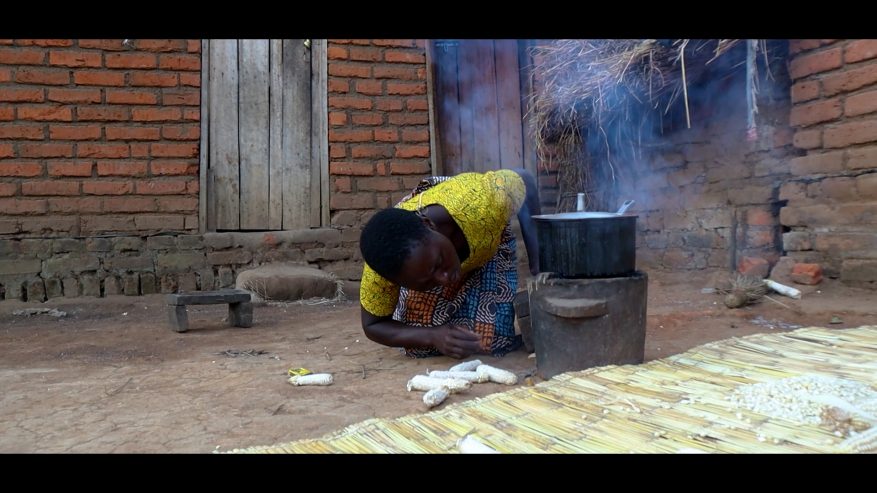
Tens of thousands of families in rural Malawi are enjoying cleaner and more reliable energy to light their homes and cook meals through a Self Help Africa energy project in partnership with GIZ EnDev and CUMO Microfinance.
The €3.5 million DSS-RBF project (short for demand-side subsidies results-based financing) offered financial subsidies to low-income rural households so that they could purchase solar home systems and improved cookstoves for less. The project focused on selling stoves and solar items at a lower costs to families.
Within two years, 73,380 households who were previously struggling with inefficient and unhealthy energy sources had improved cookstoves, known locally as ‘chitetezo mbaula’, and 29,423 solar home systems were installed.
One of those benefitted was Sauke. Before purchasing the ICS, Sauke and her family used to struggle with cooking as they were using a lot of firewood which required them to have a considerable amount of money for the same.
“Before the project I was struggling using the three stone cooking method which required a lot of firewood. I struggled to find money for firewood. When I bought the stove, I was excited knowing my cooking struggle would end and I can testify that this stove has helped us save money as it uses less firewood and produces less smoke which has helped in conserving the environment,” explains Sauke.
The programme has also supported Malawi’s growing clean energy market. Namuleri Energy Limited, a Malawian-owned renewable energy company specialising in solar home systems and clean cooking solutions that was contracted through the project, grew its contract from 600 solar home installations to 7,000 in just over a year and recruited nearly 100 people through the project as a result. Namuleri Energy Limited is now looking at how it can sustain households’ access to its products beyond the project by allowing customers to spread their cost over time.
By making technologies affordable, supporting local businesses to expand and creating employment opportunities, the approach can help build a stronger and more sustainable clean energy market across Malawi.